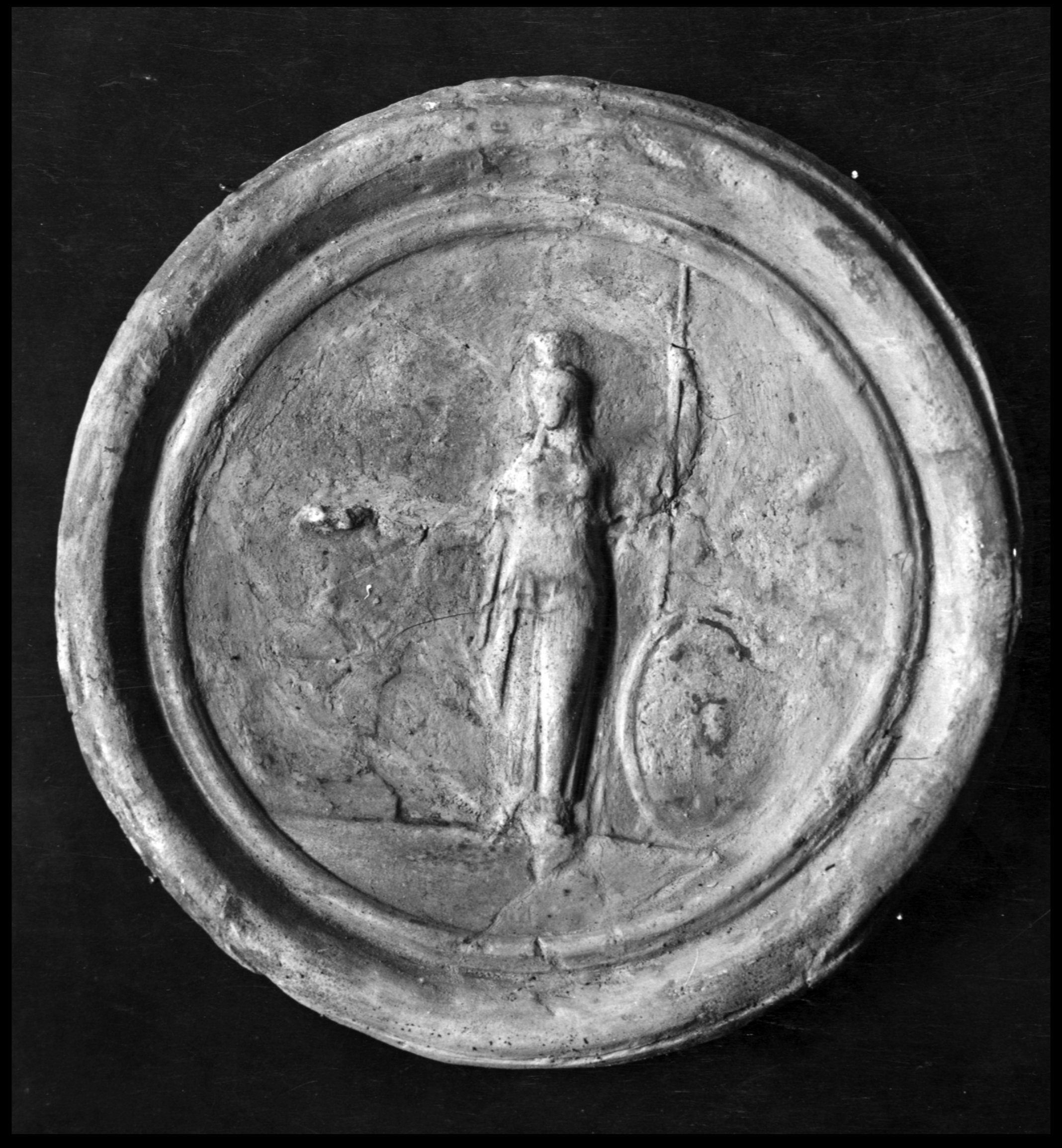
Vesseling Celestial Fire: Saturn/Neptune in Aries & Athena: Part II
The next theme I want to explore in terms of Athena requires first a little astrological theory to lay the ground. One of the ways our understanding of the zodiac is immeasurably deepened is through the concept of polarities. There are six polarities in the zodiac, Aries and Libra, Taurus and Scorpio, Gemini and Sagittarius, Cancer and Capricorn, Leo and Aquarius, and Virgo and Pisces.
In astrological language a polarity is formed by the opposition aspect, calculated at 180 degrees. While considered a challenging aspect, the opposition indicates there is tension in terms of the development of perspective and awareness of the Other who stands directly across. So the two signs are actually complementary to one another, there is an inherent affinity and resonance.
In my practice I have discovered how the opposite sign provides insight into what qualities are needed to be brought into one’s conscious attitude. This can show up as issues of too much or too little--deprivation is as much a problem as excess, each are a one-sidedness that calls for awareness.
In this sense the opposite sign acts as a kind of medicine to the problems at hand with the expressions and/or areas of life associated with a planet. Polarities can act like allopathic remedies where the cure is found in the opposite. Alchemists knew this—some materials/metals need their opposite in order to develop.
So let’s work a timely example: Aries is the zodiacal polarity partner to Libra. In part I of this essay we looked at Athena and Aries, and now I want to look at some Libra values that belong to Athena’s style of consciousness.
Weaving
The skill crafts and arts that Athena gives to humankind are essential to the work of civilization: the design of the plow and the yoke to work the hard earth; her epithet of Khalinitis, Bridler of Horses reveals her presence in this domain of human/animal relations. Shipbuilders are also said to work under her protective eye. Among the arts of civilization she is the patroness of pottery and its elemental alchemy, as well as of weaving and the loom. Recognized as belonging to Athena, weaving is an activity whose processes are evocative of the archetypal principles she personifies.
The ritual significance of weaving to this goddess shines a light on this, which the classicists Scheid and Svenbro describe:
“Once every four years, at the moment when the cranes give the signal to the Greek peasant to begin his labors (in mid-November), two young Athenian girls called arrephoroi begin weaving the peplos [tunic] destined to cover the statue of Athena nine months later, on the occasion of the goddess’s birthday.”[1]
This tunic was for the statue of Athena Polias in the Erechtheum at the Acropolis. The delivery and cloaking of the goddess took place at the Great Panathenaea ritual. The peplos was carried in a marvelous procession, and the investiture of Athena Polias with her magnificent cloak was the essential activity of the festival, together with a communal sacrifice. “Along with the ritual weaving to produce clothes for the city goddess, or even ‘for the people,’ the sacrificial sharing aimed to enact and rekindle the social and political unity.”[2]
While Athens in particular claimed her patronage, the very idea of the city and its social functioning, belongs to Athena. In astrological language these are Libra themes—a style of consciousness oriented towards the relational and social dimensions of life.
Athena is goddess of the polis, of the well-tended community and its civilizing order. This correlates to Libra whose values include the right composition of relations between people, between governments and their peoples, and how life is supported and made productive, healthful, meaningful and pleasurable through right and just relationships.
As a goddess of the polis, it is no surprise to find that weaving—the craft of joining individual threads together into a larger whole— was an image employed throughout the ancient and classical Greek tradition to express political engagement.
Drawing from Plato’s The Statesman and the analogous relationship of weaving and kingship, Scheid and Svenbro write, “the art of weaving produces a product that aims to ‘protect against suffering,’ to serve as a ‘defense,’ but to do so peacefully, as a ‘screen’: indeed, it is a kind of ‘housing’ consisting not of a roof but of a ‘cloth’.”[3]
Protection against suffering, defense, and the peaceful screen that houses, the properties belonging to weaving, are echoed in Athena’s cult titles:
Polioukhos: City Protectress or City Preserver
Poliatis: Keeper of the City
Alalkomenêis: Protectress
Eryma: Defender
The values Athena embodies in her protective role belong under the sign of Libra—justice, peace and social cohesion.
The more tender side of Athena’s protective housing is drawn out by the classicist Karl Kerenyi who describes her as “the rescuer from every danger and peril…the gracious, gentle nurse who takes the children of [hu]mankind to herself.”[4]
Taking us into herself, providing a housing of woven cloth—Athena contains, she vessels, she gathers. In order for there to be the gathering of anything of variety into a cohesive whole, be it people in a community or woolen threads, conflict, tension, disorder must give way to peace and order. Peace and order, equilibrium and harmony, are deep needs for Libra.
Weaving as an image for political life as it appears in Plato and in the play “the Lysistrata” is characterized by its pacifying nature. “It masters the opposing forces of the city before they destroy everything. It transforms ‘conflict’ into ‘marriage,’ contradiction into cohesion.”[5] Here the archetypal themes of Libra are plain—pacifying, weaving together in cohesive order, balancing, marrying opposites.
Let’s imagine this in the material process of weaving. The horizontal thread wants to move across the plane, whereas the vertical shafts of thread are anchored and pulled taut. The one a languid line that dips above and below, sinuously bending around the tension of the other. As they meet, their opposing forces are brought into accord and what is formed of the individual threads is a fabric, a larger coherence. Weaving is a wonderful metaphor for the transformation of enmity and conflict into right relationship and cohesive community. Weaving is a metaphor for Libra consciousness. Where there is a valuing of civilization and public good, there is Athena’s Libra face, the protective cloth and nurturing vessel.
In relation to the celestial movements, Libra as the polarity to Aries is seen in the concern for the collective good. In her discussion of of Neptune and Mars, Liz Greene touches on this polarity dynamic:
“The noble cause, when steeped in Neptunian longing, may disguise the individuals’ need to justify his or her existence through identification with the martyred victim-redeemer, rather than through a humble but more genuine contribution to the welfare of others.”[6]
The Libran concern with the other is the hidden unconscious value that Aries needs. This brings us back to a mature expression of Aries that can be constellated by Saturn, an example of which would be feeling a greater responsibility in directing our individual energies in service to the collective good, however we may define that. Both Athena’s Libra polarity to Aries, and the Saturn in Aries point to this as an opportunity. This care for the collective good is desperately needed in our time, and those people, groups and institutions that are dedicated to that are in essence working under Athena’s eye.
References
[1] L. Deubner, Attische Feste, quoted in Scheid and Svenbro, The Craft of Zeus: Myths of Weaving and Fabric (Harvard University Press, 2001), p. 18
[2] John Scheid and Jesper Svenbro, The Craft of Zeus: Myths of Weaving and Fabric (Harvard University Press, 2001), p. 19
[3] Scheid and Svenbro, p. 25
[4] Karl Kerenyi, Athene: Virgin and Mother in Greek Religion (Spring Publications, 2008) p. 15
[5] Scheid and Svenbro, p. 32
[6] Liz Greene, The Astrological Neptune and the Quest for Redemption (Weiser Books, 2000) p. 276